
THE 2012–2016 PROJECT
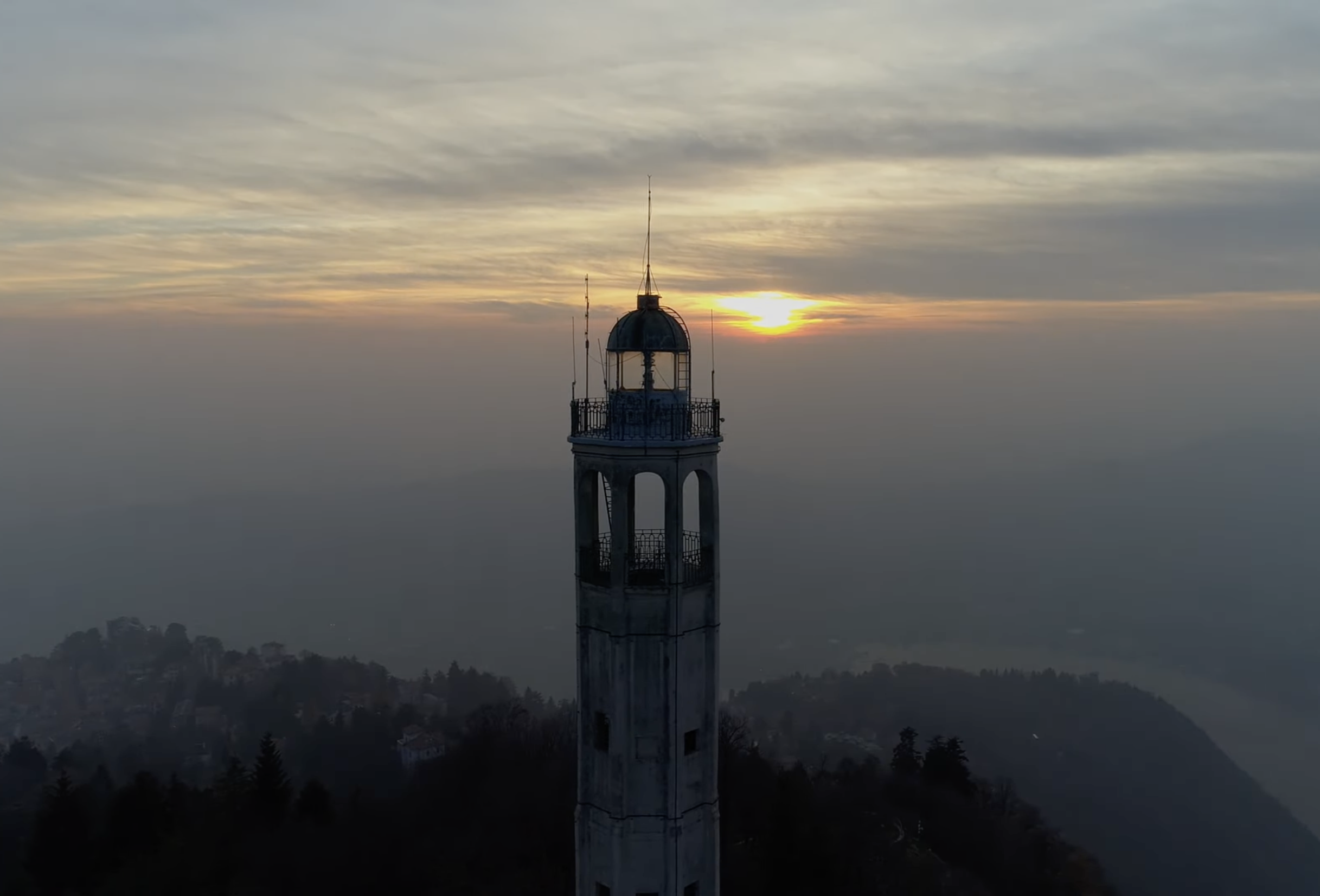
The Volta Lighthouse, located in San Maurizio, Brunate, at an altitude of 900 metres above Lake Como, was built in 1927 to mark the bicentenary of the birth of Alessandro Volta. In the same year, the Tempio Voltiano was inaugurated on the lakeside to house Volta’s scientific instruments, including the first electric battery. A scientific congress was also organised, bringing together 20 Nobel Prize laureates from around the world—an event that remains unique in the history of science.
Since then, the lighthouse has illuminated the night with its distinctive rotating tricolour beam, visible from many kilometres away. The panoramic view from the site is truly spectacular.
Following repeated reports from a Rotary Club of Como member concerning poor maintenance, structural deterioration, and technical faults affecting the lighthouse’s operation, the Club began exploring possible solutions in 2004. The initial objective was to modernise the rotating lighting system, reducing energy consumption while improving reliability.
The first step was to investigate the use of LED technology and a new rotation system. A research project was therefore commissioned at the Politecnico di Milano, focusing on high-intensity LED lighting for this type of application. The study concluded that high-power LED technology was still at an experimental stage and therefore not yet suitable for practical implementation.
Building on these findings, a working group was established in 2012, consisting of two Club members and an external engineer specialising in innovation. During the research, they discovered that the company VEGA was a pioneer in LED technology for maritime lighthouses and had already installed similar systems in Japan and the Canary Islands.
Following technical evaluations and cost analyses, the Rotary Club of Como launched its 2012–2016 multi-year project. The final working group consisted of three Club members and one external consultant. The successive Club Presidents and Boards agreed to allocate resources over several Rotary years to bring the project to completion.
PROJECT OBJECTIVES
The project consisted of three main activities:
1. Cooperation Agreement
To promote an agreement between the Municipality of Como (the owner of the lighthouse) and the Municipality of Brunate (where the lighthouse is located) in order to establish joint responsibility for the preservation and management of the monument.
This resulted in a formal agreement approved by both municipalities, incorporating the recommendations put forward by the Rotary Club of Como.
2. Removal of Obsolete Components
The original rotating mechanism operated on an annular bath containing 70 kilograms of liquid mercury, creating significant environmental and safety concerns. A specialised contractor was therefore required to remove and dispose of the mercury in full compliance with all regulations.
The work was carried out by SPHEAREA, a company based in Gorizia. Components of historical and technical significance were preserved and made available to the public authority responsible for the monument.
3. Installation of the New Lighting System
A new lighting system was purchased and installed. The equipment was manufactured in New Zealand, while several companies from the Como area contributed to transportation, customs clearance, electrical and electronic installations, and lifting operations.
In 2016, more powerful lamps were installed with a slightly wider beam angle, improving the visibility of the lighthouse from nearby areas.
The renovated lighthouse has now been operating reliably for many months without any technical issues. The project stands as an excellent example of how a Rotary Club, by combining the expertise, commitment, and goodwill of its members, can successfully deliver a complex initiative that preserves and enhances an important historical monument dedicated to one of Italy’s greatest scientists.